Intack Primary School Proud to Belong
Prevent
British Values
The policy sets out the four key areas within which the DfE has defined British values, and the ways in which our students learn and develop understanding of these areas, both through the curriculum, extracurricular and other opportunities.
Introduction
The government set out its definition of British values in the 2011 Prevent Strategy, and these values have been reiterated. As of September 2014, the DfE;
‘requires all schools to promote the historical and current values that underpin the national identity known as being British.’
Within this, all schools are required to ensure that the curriculum actively promotes these fundamental British values. Intack Primary School is a multicultural community within which we celebrate students and cultures from all over the world. Alongside this, we are keen to support all students in learning about and deepening their understanding of British values, culture and systems.
What are the British Values?
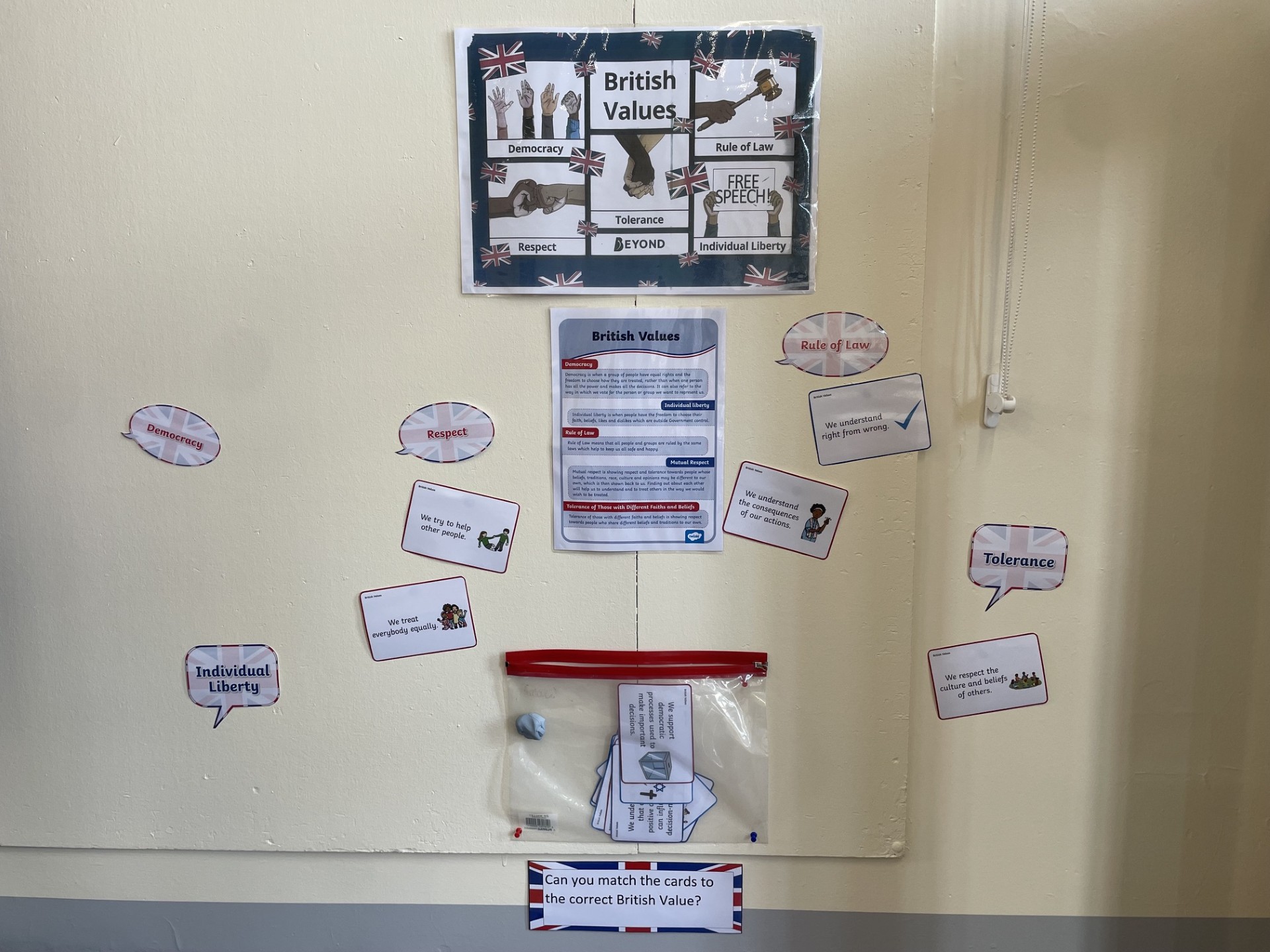
Fundamental British values are defined by the DfE as:
(a) Democracy: Respect for democracy and support for participation in the democratic process
(b) The rule of law: Respect for the basis on which the law is made and applies in England
(c) Individual liberty: Support and respect for the liberties of all within the law
(d) Mutual respect and tolerance: Support for equality of opportunity for all and respect and tolerance of different faiths and religious and other beliefs
How do we promote British Values at Intack Primary School?
Democracy:
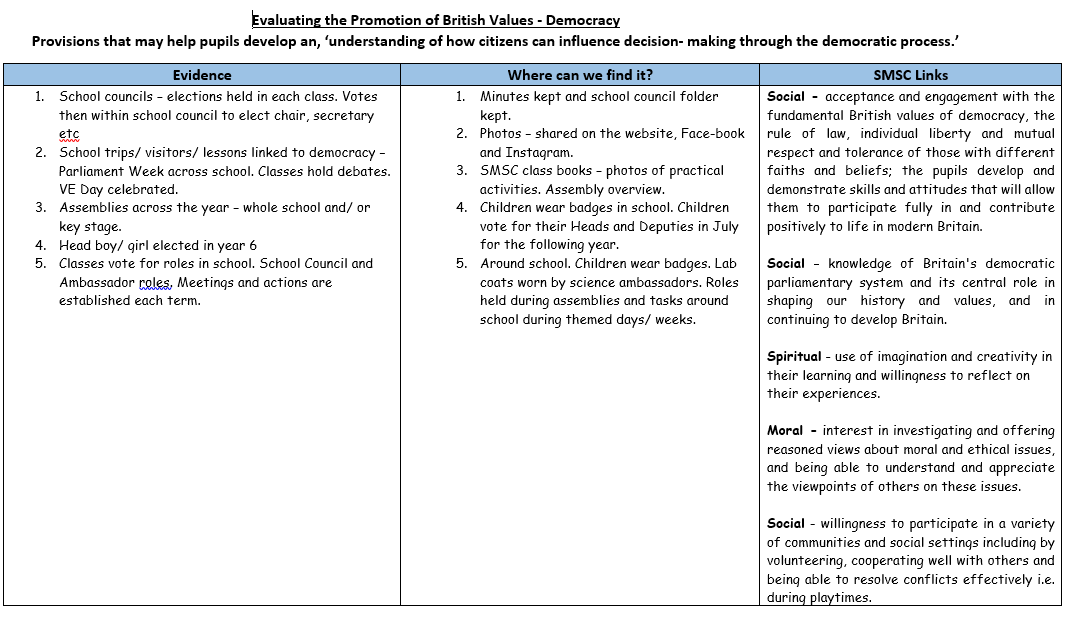
Respect for democracy, democratic participation and active involvement of all pupils is evident across the school. We aim to provide pupils with a broad general knowledge of, and promote respect for, public institutions and services. Our aim is to teach pupils how they can influence decision-making through the democratic process. For example: pupils have the opportunity to have their voices heard and are able to express their views freely through School Council. The elections of School Council representatives each year are based solely on pupil votes (which helps to highlight some of the advantages and disadvantages of democracy and how it works in Britain). This effective involvement of pupils in democratic procedures enables them to influence and make decisions on matters which affect their lives within school.
RULE OF LAW:
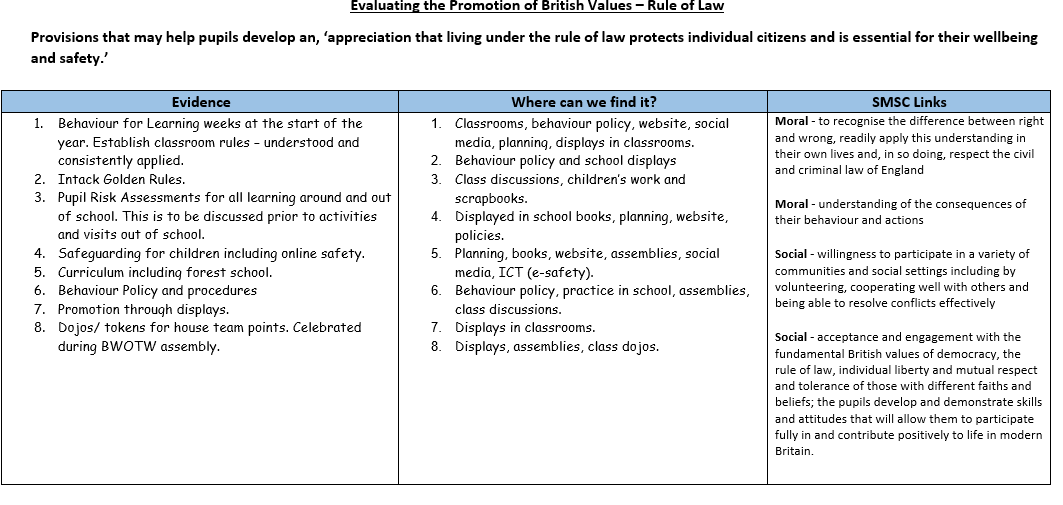
The importance of laws, whether they be those that govern the class, the school, or the country, are consistently reinforced throughout regular school days, as well as when dealing with behaviour and through school assemblies. Pupils are taught to have respect for the basis on which the law is made and how the law is applied in England. We aim to teach children the value and reasons behind laws, that they govern and protect all of us, the responsibilities that this involves and the consequences when laws are broken.
They take their many responsibilities, such as school councillors, very seriously. They contribute very well to the wider community, for example, as Eco Warriors.’ Throughout the year we welcome visits from members of the wider community and from public institutions such as the Police and the Fire Service to help reinforce the importance of the Rule of Law for our pupils. We ensure that school rules and expectations are clear and fair and our pupils understand that rules are there to protect us just as living under the rule of law protects all individuals.
INDIVIDUAL LIBERTY:
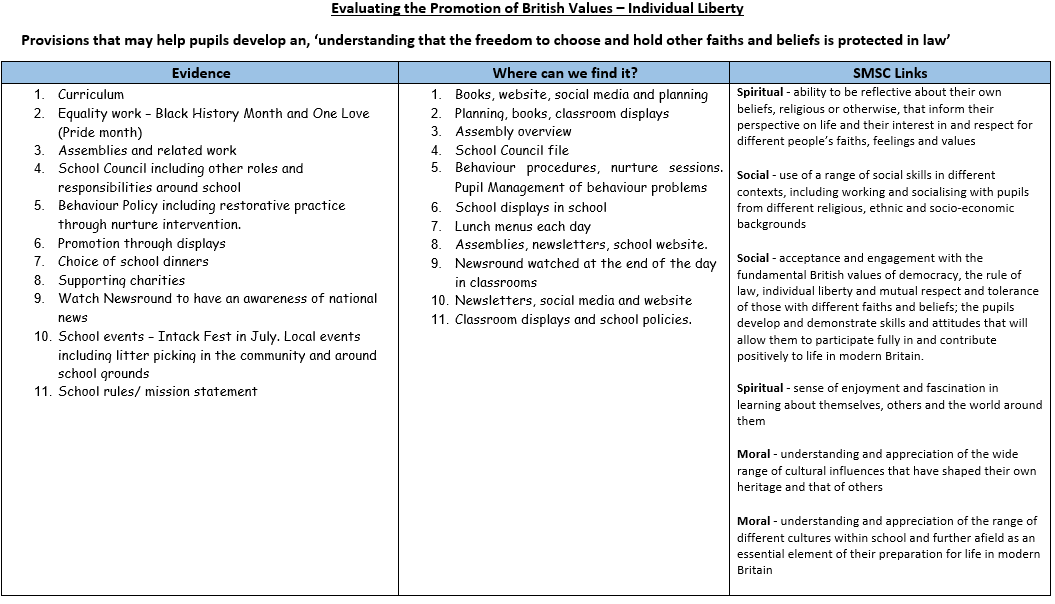
We support pupils to develop their self-knowledge, self-esteem and self-confidence. Pupils are encouraged to know, understand and exercise their rights and personal freedoms and how to exercise these safely, for example through our E-Safety, menu choices and class discussions/ circle time in PSHE. Pupils are taught to respect the rights of others and to consider their responsibilities towards other people, including taking responsibility for their behaviour. Within school, pupils are actively encouraged to make choices. As a school, we educate and provide boundaries for pupils to make choices safely through provision of a safe and secure environment and empowering education.
Whether it is through choice of challenge, or of participation in our numerous extra-curricular clubs and opportunities, pupils are given the freedom to make choices. We welcome freedom of speech through pupil participation, while ensuring protection of vulnerable pupils and challenging stereotyping of others. We implement and actively promote a strong anti-bullying culture and invite visitors into school to support our anti-bullying policy.
MUTUAL RESPECT AND TOLERANCE:
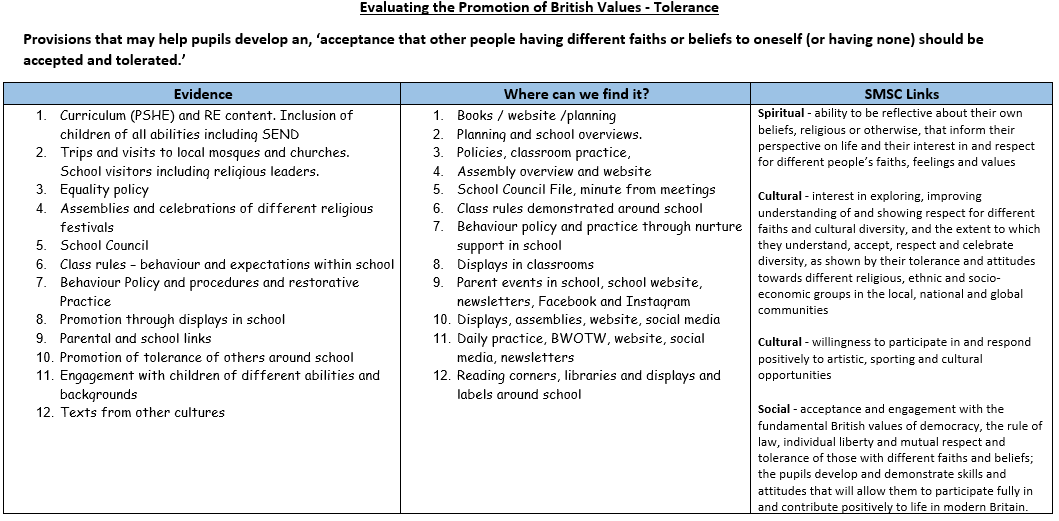
Part of our school ethos and behaviour policy revolves around our Mission Statement, which states that we expect everyone within our school to feel safe, valued, be treated fairly with dignity and respect in order to achieve their full potential. Pupils are expected to show mutual respect towards everything and everyone, regardless of individual differences, at all times. All children, adults and visitors are expected to behave respectfully and we will challenge anybody who displays prejudicial or discriminatory behaviour. Pupils take part in assemblies and class discussions related to what this means and how it is shown.
We help pupils to acquire an understanding of, and respect for, their own and other cultures and ways of life. This is achieved through enhancing pupils' understanding, through the curriculum, of their place in a culturally diverse society and by giving pupils opportunities to experience such diversity. Assemblies and discussions involving identifying and combating discrimination, prejudices and prejudice-based bullying have been followed and supported by learning in RE and Life Education PSHE.
References
DfE, September 2014 School Inspection Handbook: Handbook for inspecting schools in England under section 5 of the Education Act 2005 (as amended by the Education Act 2011), No. 120101 Crown Copyright 2014.
HM Government home office 07/06/2011 Policy paper: Prevent Strategy 2011 Ref: ISBN 9780101809221 Crown Copyright