Skip to content
  • Spelling


    At Intack we want to ensure that all of our children are able to spell accurately and to recognise when spellings are inaccurate. By building up spelling knowledge systematically we aim to develop confident accurate writers who approach the spelling of words in our complex English language with confidence and understanding. 

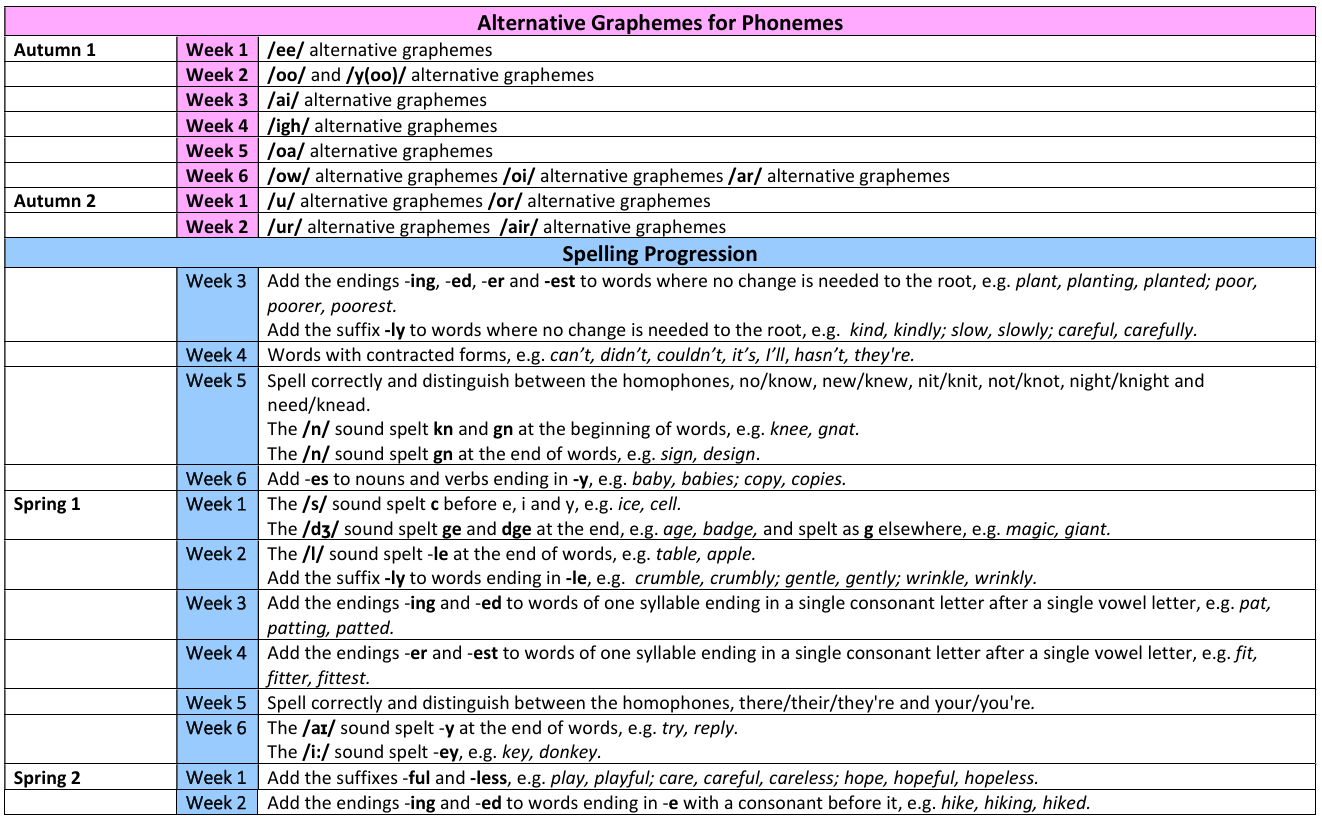
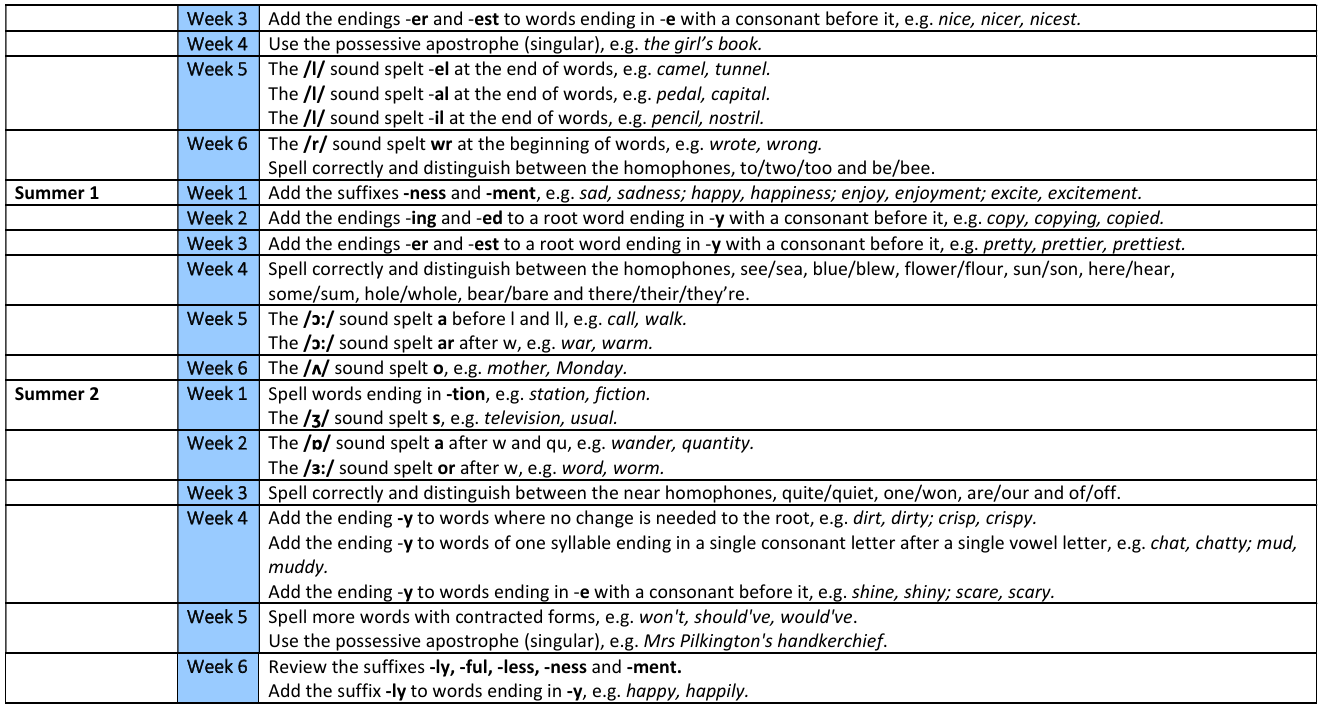
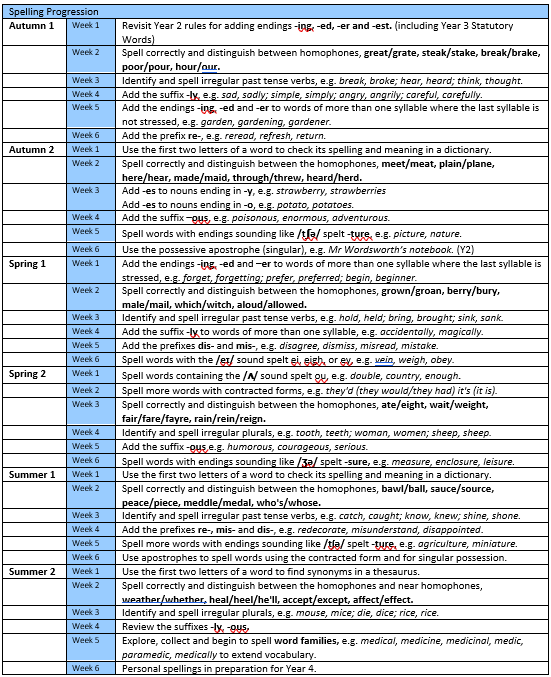
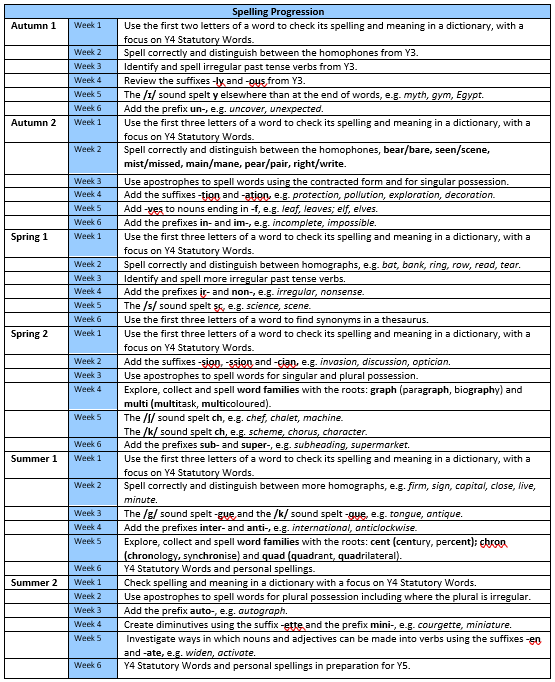
    Our spelling teaching begins with grapheme-phoneme correspondence knowledge from EYFS through KS1 (Little Wandle and Little Wandle Bridge to Spelling in Y2). These skills form the building blocks for all subsequent teaching as we begin to recognise more complex spelling patterns in a structured progression (Y2 – Y6 No Nonsense Spelling).


    To ensure our children become confident, proficient spellers, we strive: 

    • To ensure that the foundations of spelling, such as using digraphs, trigraphs and alternative graphemes for phonemes, are secure initially through high quality phonics teaching using our systematic phonics scheme (Little Wandle) and embedding this through the use of our Little Wandle Spelling Scheme in year 2.
    • To encourage children to use GPCs that they have learned when writing and using resources to support this process.
    • To provide children with strategies to learn sight words (common exception words), for example recalling the tricky part of the word.
    • To provide pupils with a range of strategies that support children in being able to apply rules, practise spellings and remember the spelling of commonly misspelt words e.g. mnemonics.


    To build on children phonics skills and systematically teach the spelling patterns in KS2 using our school’s spelling scheme: No Nonsense Spelling.

    • To systematically teach the spelling patterns throughout Years 3 to 6.
    • To develop children’s understanding of the role of morphology (units of meaning such as word stems, prefixes and suffixes) and etymology (origin of a word). 
    • To provide children with the meanings for the words that they are expected to spelling correctly.
    • To provide weekly opportunities for children to practise their spellings both in school and at home with their adults to reinforce their learning. 

    We also develop our children’s knowledge of word origins (etymology) and word structure (morphology) e.g. the use of prefixes and suffixes and recognising rarer GPCs.

    Alongside this, the statutory common exception words are taught in each year group and practised regularly.

    A wide range of strategies are introduced and practised to address the learning needs of different pupils. These develop auditory, visual and kinaesthetic learning skills to embed knowledge of common exception words e.g. mnemonics, image around the word, word shapes and rainbow writing. These activities provide support and encouragement to all pupils but especially those who may find memorising spellings difficult.

    The children’s progress is monitored in lessons and concerns are passed on to our SEND team. Interventions such as Little Wandle Rapid Catch Up and IDL are used with small groups in each class for additional support.

    Weekly spellings are set and words are tested both individually and in dictated sentences to ensure spelling skills are used in meaningful contexts. Similarly, where TfW shared writing links to spelling teaching, overt links are made during lessons. Toolkits and word mats are also available in classes.

    SPAG tests are completed each half-term alongside our independent writing monitoring.

    Through an increased understanding of spelling patterns, detailed phonetic knowledge and a range of strategies to practise and learn common exception words, our pupils have become more confident writers.

    Consistency of use of our spelling strategy from EYFS through to Y6 ensures that our pupils develop a solid understanding throughout school. Newer pupils who arrive mid-year are supported to catch up through Little Wandle Rapid Catch Up phonics and IDL interventions.

    Our pupils’ stronger spelling skills support them to be confident writers, which ultimately contributes to improved academic achievement and more confidence in all written tasks throughout their lives.